API Sucker Rods for Deep Wells

sucker rod & accessories
December 25, 2025
Category Connection: Oilfield Sucker Rods
Brief: In this video, we provide a detailed walkthrough of API Carbon Steel Polished Oilfield Sucker Rods, designed for deep wells and PCP pumps. You'll see the rigorous manufacturing process, from initial inspection to final packaging, and learn about the mechanical properties that ensure reliability in demanding environments. Stay tuned as we highlight the most important features and real-use results.
Related Product Features:
  • Manufactured in compliance with API Spec 11B, including grades D, K, KD, HL, and HY for diverse well conditions.
  • Specifically developed Grade H sucker rods for deep well applications and PCP pumps.
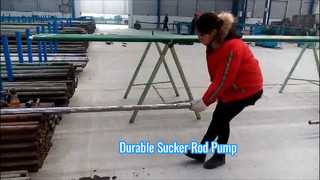
  • Comprehensive manufacturing process includes inspection, straightening, hot forging, heat treatment, and CNC machining.
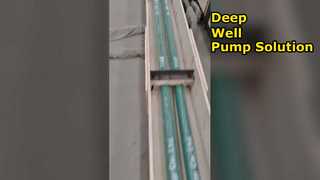
  • Rods are shot-blasted to remove scale and oxidation, then coated with rust inhibitors for protection.
  • Available in multiple sizes from 5/8 inch to 1-1/8 inch with corresponding coupling and wrench dimensions.
  • High mechanical properties with tensile strengths ranging from 621 MPa to 1,195 MPa depending on the grade.
  • Designed with precise API dimensions and checked with approved gauges for quality assurance.
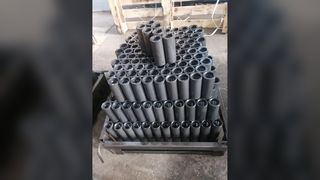
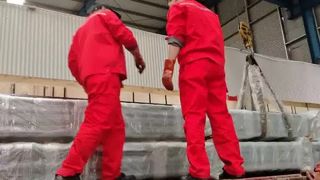
  • Packaged and palletized for safe transport and handling, ensuring they arrive in optimal condition.
FAQs:
  • What API specification are these sucker rods manufactured to?
    These sucker rods are manufactured according to API Spec 11B, ensuring they meet industry standards for quality and performance in oilfield applications.
  • Which grades of sucker rods are available for deep wells?
    Grade H sucker rods are specifically developed for deep wells and PCP pumps. Additionally, grades D, K, KD, HL, and HY are available to suit various operational requirements and depths.
  • How are the sucker rods protected against corrosion during storage and transport?
    The rods are cleaned by shot-blasting to remove scale and oxidation, then coated with rust inhibitors. They are carefully packaged and palletized to ensure they remain protected and in excellent condition.
  • What are the key steps in the manufacturing process to ensure quality?
    The process includes inspection of rod bars, machine straightening, cold drawing, hot forging of ends, full-length heat treatment, straightness checks, shot-blasting, CNC machining to API dimensions, and final packaging with rust inhibitors.