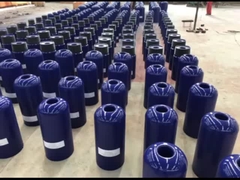
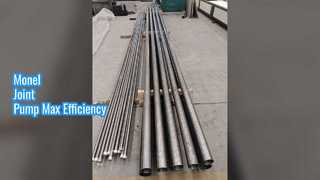
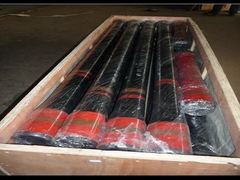
Brief: Looking for a straightforward way to understand the critical components of downhole oil production? This video provides a clear walkthrough of API Carbon Steel Petroleum Downhole Sucker Rod Pumps, showcasing their design variations and explaining how they function as essential subsurface equipment in rod-having pump operations.
Related Product Features:
Manufactured to API standards for reliable performance in downhole oil production.
Available in both tubing pump and rod pump configurations to suit various operational needs.
Features metal plunger pumps for durable and efficient subsurface operation.
Offers soft-packed plunger pumps for enhanced sealing and reduced wear.
Includes heavy-wall and thin-wall barrel options for different pressure requirements.
Provides stationary barrel designs with top, bottom, or traveling anchor points.
Customizable service options to meet specific downhole application demands.
Constructed from carbon steel for strength and longevity in petroleum environments.
FAQs:
What is a subsurface sucker rod pump used for?
A subsurface sucker rod pump is a critical downhole oil production equipment used in rod-having pump operations to lift oil to the surface from the wellbore.
What are the main types of API sucker rod pumps available?
The main types include metal plunger pumps and soft-packed plunger pumps, available in both rod pump configurations (like RHA, RHB, RHT) and tubing pump configurations (like TH, TP), with heavy-wall or thin-wall barrel options.
How do rod pumps and tubing pumps differ?
Rod pumps are designed with the barrel stationary and anchored at the top, bottom, or traveling, while tubing pumps are configured with the pump barrel attached to the tubing string, each suited for different well conditions and installation methods.